
Frequently Asked Questions
Is cement the same as concrete?
No, cement and concrete are not the same thing.
Cement is actually a fine powder, one of the main ingredients used to make concrete. In its simplest form, concrete is a mixture of cement powder, water, and fine and/or coarse aggregates such as sand and stone.
When cement powder and water are combined, they form a paste that acts as a binding agent. This paste coats and binds the aggregates together. A chemical reaction called hydration begins as soon as water is added, causing the mixture to harden and gain strength over time. After the concrete is poured, it continues to cure, allowing hydration to progress and the material to develop into the strong, stone-like surface we recognize as concrete.
What is
Redi Mix?
Redi Mix concrete is a pre-batched concrete solution made by combining raw materials in a drum mixer at our facility, where they are blended to create fresh concrete. By the time the truck arrives at your home or job site, the concrete is fully mixed and ready to pour. Each load is custom-designed to meet the specific needs of your project and is mixed just moments after the truck leaves the plant, ensuring quality, consistency, and optimal performance.
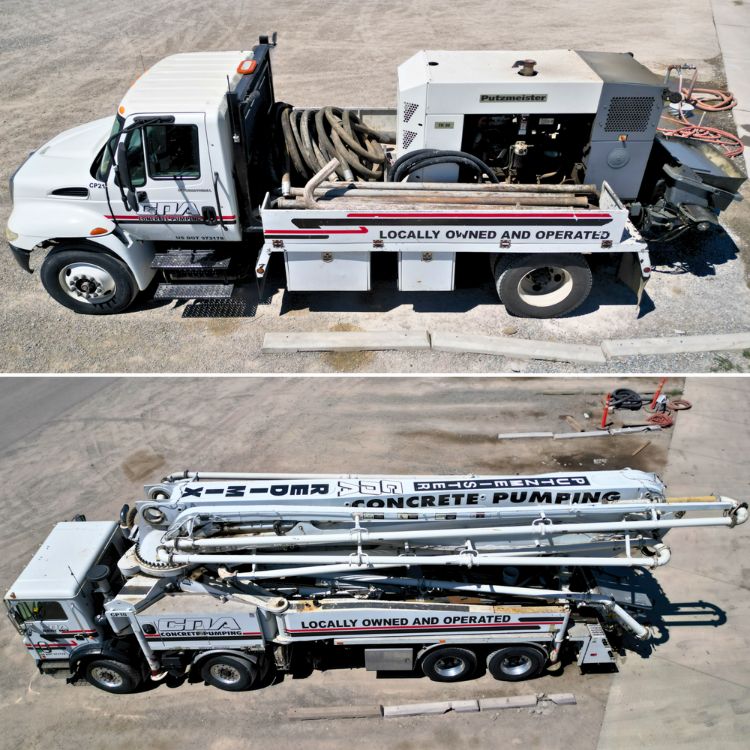
Line Pump VS Boom Pump
A CDA concrete line pump uses a hopper and a series of hoses to push the concrete through. The contractor or hose-man guides the hose to precise locations, making it ideal for indoor pours and tight spaces.
A CDA concrete pumping boom truck uses a hydraulic robotic arm to quickly place a large volumes of concrete at a height or distance, while minimizing downtime.
Line Pump Vs Boom Pump
A CDA concrete line pump uses a hopper and a series of hoses to push the concrete through. The contractor or hose-man guides the hose to precise locations, making it ideal for indoor pours and tight spaces.
A CDA concrete pumping boom truck uses a hydraulic robotic arm to quickly place a large volumes of concrete at a height or distance, while minimizing downtime.
What steps can I take to maintain my new driveway?
First 24–48 Hours
You may walk on your new blacktop immediately, but avoid driving on your newly paved driveway for at least 24–48 hours to allow the asphalt sufficient time to cool and set properly. During periods of hot weather, additional curing time may be recommended to help prevent surface markings or indentations.
First 6–12 Months
Your new asphalt driveway will continue to cure and harden during its first year. While it is designed for normal vehicle traffic, taking a few extra precautions during this period will help protect the surface and ensure long-term performance.
Avoid parking in the same location every time. Also, refrain from making “stop turns,” where the steering wheel is turned while the vehicle is stationary, as this can scuff or tear the surface, especially during hot weather.
Avoid placing concentrated weight on small contact points. Jack stands, car ramps, kickstands, trailer tongue jacks, and even high heels can leave indentations or holes in newly paved asphalt. When using jack stands or car ramps, or when storing trailers or boats for extended periods, place plywood beneath the contact points to help distribute the weight evenly.
Large trucks and other heavy vehicles should be kept off the driveway whenever possible during the curing period, as excessive weight can cause permanent depressions.
Throughout the Life of Your Driveway
To maximize the life of your driveway, avoid exposure to gasoline, diesel fuel, motor oil, antifreeze, grease, lubricants, and other petroleum-based products. These materials can soften the asphalt binder and accelerate surface deterioration.
The edges of an asphalt driveway are its weakest areas because they lack support beyond the pavement. Avoid driving or parking on the edges whenever possible, as repeated loading can cause cracking, crumbling, or edge failure over time.
Although every effort is made to eliminate grass and weeds before paving, some vegetation may have deep root systems that can occasionally grow through the asphalt. If this occurs, treat the growth with an appropriate weed killer as soon as possible to help prevent further damage.
As Needed
Inspect your driveway periodically for cracks and seal them promptly if they develop. Sealing cracks early helps prevent water from penetrating beneath the pavement, where freezing and thawing cycles can cause expansion, and accelerate deterioration.
After the First Year
Allow your driveway to fully cure before applying its first seal coat. After the initial curing period, apply a quality seal coat every 2–4 years, depending on traffic levels and local climate conditions. Seal coating protects the surface from oxidation, moisture intrusion, UV exposure, and normal wear, extending the life and appearance of your driveway.
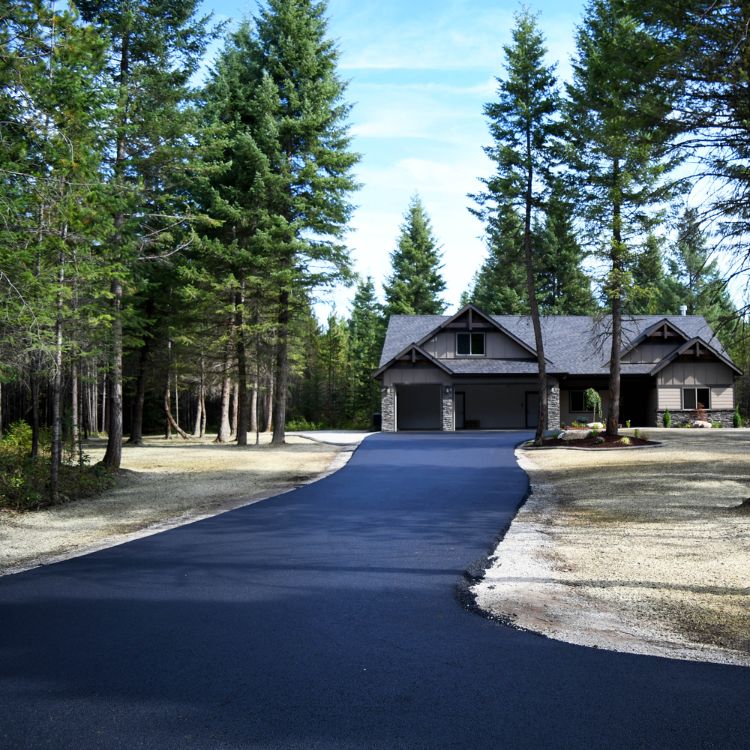
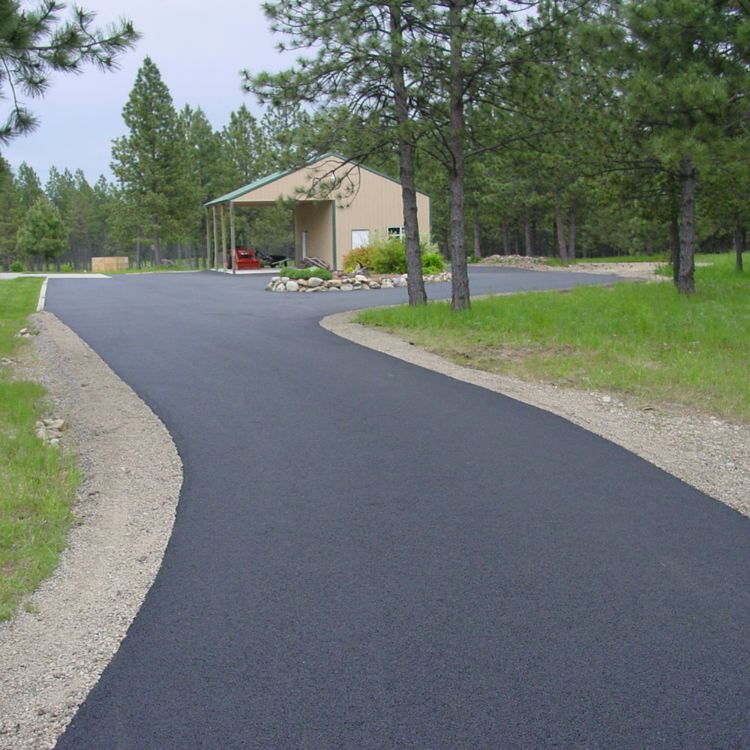
What steps can I take to maintain my new driveway?
First 24–48 Hours
You may walk on your new blacktop immediately, but avoid driving on your newly paved driveway for at least 24–48 hours to allow the asphalt sufficient time to cool and set properly. During periods of hot weather, additional curing time may be recommended to help prevent surface markings or indentations.
First 6–12 Months
Your new asphalt driveway will continue to cure and harden during its first year. While it is designed for normal vehicle traffic, taking a few extra precautions during this period will help protect the surface and ensure long-term performance.
Avoid parking in the same location every time. Also, refrain from making “stop turns,” where the steering wheel is turned while the vehicle is stationary, as this can scuff or tear the surface, especially during hot weather.
Avoid placing concentrated weight on small contact points. Jack stands, car ramps, kickstands, trailer tongue jacks, and even high heels can leave indentations or holes in newly paved asphalt. When using jack stands or car ramps, or when storing trailers or boats for extended periods, place plywood beneath the contact points to help distribute the weight evenly.
Large trucks and other heavy vehicles should be kept off the driveway whenever possible during the curing period, as excessive weight can cause permanent depressions.
Throughout the Life of Your Driveway
To maximize the life of your driveway, avoid exposure to gasoline, diesel fuel, motor oil, antifreeze, grease, lubricants, and other petroleum-based products. These materials can soften the asphalt binder and accelerate surface deterioration.
The edges of an asphalt driveway are its weakest areas because they lack support beyond the pavement. Avoid driving or parking on the edges whenever possible, as repeated loading can cause cracking, crumbling, or edge failure over time.
Although every effort is made to eliminate grass and weeds before paving, some vegetation may have deep root systems that can occasionally grow through the asphalt. If this occurs, treat the growth with an appropriate weed killer as soon as possible to help prevent further damage.
As Needed
Inspect your driveway periodically for cracks and seal them promptly if they develop. Sealing cracks early helps prevent water from penetrating beneath the pavement, where freezing and thawing cycles can cause expansion, and accelerate deterioration.
After the First Year
Allow your driveway to fully cure before applying its first seal coat. After the initial curing period, apply a quality seal coat every 2–4 years, depending on traffic levels and local climate conditions. Seal coating protects the surface from oxidation, moisture intrusion, UV exposure, and normal wear, extending the life and appearance of your driveway.
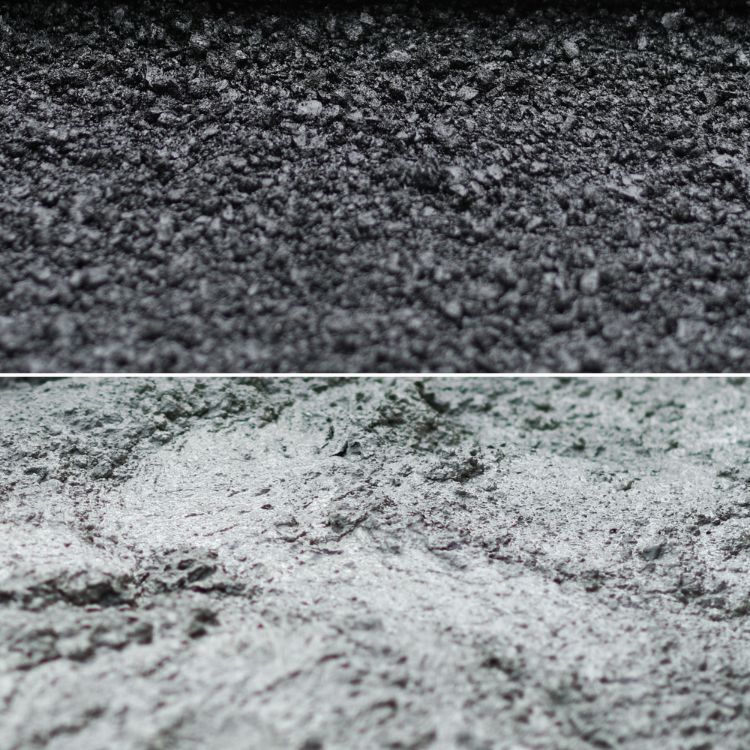
What is the difference between asphalt & concrete?
Asphalt is produced by combining specific aggregates with hot bitumen, a durable petroleum-based binder that holds the mixture together and provides flexibility. This composition allows asphalt surfaces to withstand temperature fluctuations and heavy traffic while maintaining a smooth finish.
Concrete is produced by blending aggregates, such as sand and gravel, with a cement binder and water. Once cured, the mixture hardens into a strong, rock-like material known for its structural integrity and long service life.
While asphalt and concrete are both widely used for driveways, roads, and parking areas, each material offers distinct advantages for different applications. Differences in appearance, installation cost, maintenance requirements, performance in various climates, and overall longevity can make one option more suitable than the other.
Our team at CDA, is available to provide professional guidance and help you determine the most effective material and application for your specific project.
What is the difference between asphalt & concrete?
Asphalt is produced by combining specific aggregates with hot bitumen, a durable petroleum-based binder that holds the mixture together and provides flexibility. This composition allows asphalt surfaces to withstand temperature fluctuations and heavy traffic while maintaining a smooth finish.
Concrete is produced by blending aggregates, such as sand and gravel, with a cement binder and water. Once cured, the mixture hardens into a strong, rock-like material known for its structural integrity and long service life.
While asphalt and concrete are both widely used for driveways, roads, and parking areas, each material offers distinct advantages for different applications. Differences in appearance, installation cost, maintenance requirements, performance in various climates, and overall longevity can make one option more suitable than the other.
Our team at CDA, is available to provide professional guidance and help you determine the most effective material and application for your specific paving project.
What are the benefits of paving my driveway?
- A paved surface creates a clean, smooth, and dust-free environment compared to gravel or dirt. It eliminates loose rock, reduces mud during wet conditions, helps drain water away from buildings, and provides a more polished, professional appearance year-round.
- Installing a professionally paved driveway or parking area can significantly enhance curb appeal and increase overall property value. A well-maintained surface not only improves functionality but also leaves a strong, positive impression on visitors, customers, or potential buyers.
- Unlike gravel surfaces that require routine grading, new rock applications, and ongoing weed control, asphalt and concrete both minimize annual maintenance demands. This reduction in upkeep saves both time and money while maintaining a consistently even surface.
- During the winter months, paved surfaces are far easier to maintain. Asphalt and concrete both allow for efficient snow removal with shovels, plows, or snow blowers, helping reduce the risk of surface damage and making winter access safer and more convenient.
- For homeowners in shared-access areas or neighboring properties, collaborating on a paving project can yield additional cost savings. By sharing mobilization and equipment expenses, multiple property owners can benefit from professional paving services at a reduced individual investment.
- Our estimator will review your project and determine the best material for your project.
- Paving your driveway offers long-term durability and performance. Its efficient installation process and aesthetic appeal make it attractive for homeowners and businesses looking to maximize the value of their property.

What steps are taken to complete my driveway?
- Our estimator will carefully measure the area to be paved and evaluate the existing subgrade to ensure it is suitable to support a long-lasting surface. This inspection helps identify any underlying issues that could affect performance over time.
- Proper drainage is a critical part of any paving project. The estimator will assess current drainage conditions to confirm that water will flow away from the surface as intended. If improvements are needed, we take the necessary steps to correct grading or drainage concerns before paving begins.
- If the existing subgrade is found to be unstable or unsuitable, we determine how much material must be removed and replaced with structural fill. This process creates a compact, stable foundation that supports traffic loads and prevents premature settling or cracking.
- A finish-grade base layer of crushed rock is then installed, moistened, and mechanically compacted to create a smooth, tight, and properly graded surface. This solid base is essential for ensuring the strength and longevity of the finished pavement.
- To help prevent vegetation growth, soil sterilization is applied over the prepared base rock. This reduces the likelihood of weeds penetrating through the asphalt surface in the future.
- Typically, a 2″ – 3″ layer of asphalt is placed and compacted to achieve a smooth, durable finish. Once paving is complete, the job site is thoroughly cleaned, and the edges are properly backed with rock to provide support and a clean, finished appearance.
Key Elements to Building with Concrete
- Stands The Test of Time: Concrete structures are designed to last for centuries. Unlike other materials, concrete only gets stronger over time. Concrete has been in existence for as long as 7,000 BC. Throughout history, concrete has proven itself to be a most flexible and durable construction material.
- Safe & Strong: Concrete does not burn, It cannot be set on fire and does not emit any toxic fumes when affected by fire. Concrete has a high degree of fire resistance and, in most applications, is virtually fireproof. Concrete can also withstand the damaging effects of wind and water.
- Sustainable: Concrete’s strength, durability, and energy efficiency make it an environmentally friendly material, especially when you consider the entire lifecycle of the building. Roman buildings, dating back to the late 1st century, such as the Colosseum, are living examples of concrete’s strength and durability.
- Simple To Use: No other modern construction material offers as wide a range of options as concrete. It can readily assume any form, color, or texture. Its ability to mold into any shape, size, or design imaginable makes it the material of choice for resilient construction.
- Value That Lasts: Concrete will not rot, mold, rust, or deteriorate. It is energy-efficient and virtually maintenance-free, which means the resources you invest now will last for decades.